Painting Projects Planning Process Webinar
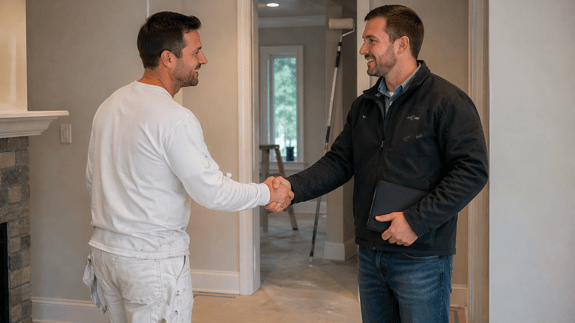
Planning painting projects effectively gives community associations a structured path to protecting building exteriors, extending the life of critical assets, and keeping properties looking their best between major capital cycles. We recently hosted an educational webinar featuring industry professional Michael LaRue from Benjamin Moore, who shared his extensive expertise on the painting project planning process, offering actionable strategies for property managers, board members, and association professionals.
This CEU course explored the lifecycle of planning a community paint project, from initial planning and color selection to specification writing and contract administration. Attendees learned how to approach contractor selection, understand paint composition, and safeguard the community's financial interests through proper lien management and warranty documentation.
Disclaimer: This video is for educational purposes only. You will not receive credits for watching the recording. Credits were issued only to those that attended the course.
If you enjoyed this video, check out our YouTube channel and subscribe to view all of our educational videos relating to community association management in Florida.
Key Takeaways
-
Start Planning Early: Begin planning the next paint project as soon as the current one is complete, accounting for budgeting, timelines, and warranty periods that typically run 5 to 10 years.
-
Color Selection Requires Expert Input: Environmental factors, community demographics, and the reflective properties of liquid paint all influence color choice, making drawdown samples and color consultants valuable resources.
-
Specifications Are the Foundation of the Contract: The paint manufacturer's scope of work must be incorporated into the contractor's agreement to prevent discrepancies, unexpected costs, and unmet expectations.
-
Lien Management Protects the Community: Partial lien releases must be collected from all vendors before each payment, and a full release of lien is required before the final payment is issued to the contractor.
Why Is the Planning Phase So Critical for Paint Projects?
For condominium and HOA communities, a paint project is rarely just a cosmetic update. There are three primary reasons a community undertakes an exterior paint project: protecting the building from the elements, aesthetically revitalizing the property, and facilitating a color change or structural restoration. Each of these objectives carries different planning requirements, timelines, and budget implications, which is why the planning phase must be approached with the same rigor as the project execution itself.
A key consideration in the planning phase is board continuity. Board members change annually or biannually, and the institutional knowledge surrounding a paint project can be lost during those transitions. Establishing a clear, documented process from the outset, including who is responsible, what the timeline is, and how decisions will be made, ensures the project moves forward effectively regardless of board turnover.
Budgeting and Reserve Funding
Funding a paint project, particularly one that involves structural restoration, requires careful financial planning. Communities should account for annual cost increases of 8 to 10 percent when projecting future paint budgets, as inflation affects everything from labor to materials. A well-maintained reserve study is an invaluable tool in this process, helping associations ensure that adequate funds are available when the project is ready to begin, without resorting to special assessments.
"We suggest the time you finish your paint job, you start planning for your next one. To create budgets, some thought processes, the length of when you are going to paint would need to be considered." - Michael LaRue, Benjamin Moore
Navigating Color Selection and Paint Specifications
Color selection is consistently one of the most challenging aspects of a community paint project. In mixed-age communities, residents perceive color differently, and competing preferences can create significant delays. Engaging a professional color consultant helps the association navigate these dynamics objectively. Additionally, communities should be cautious about selecting very dark colors in Florida, as darker pigments absorb more heat from the sun, accelerating fading and increasing the building's cooling costs.
Before finalizing any color, associations should request liquid paint drawdown samples and apply them directly to the building in areas that receive both morning and afternoon light. Fan deck color chips, which are printed with ink rather than liquid paint, do not reflect light the same way and can give a misleading impression of how a color will appear on the building's surface. Environmental factors such as green grass, red barrel tile roofs, and surrounding structures can all affect the final appearance of the chosen color.
Understanding Paint Composition
Understanding what goes into a can of paint helps association leaders make more informed decisions when evaluating products. All exterior paints contain four primary components: pigment for color, filler pigment for thickness, resins and binders for durability, and solvents. Additives such as fungicides and defoamers are also included to improve stability and performance. In high-quality paints, the resin and binder content is proportionally higher than the pigment content, which is a key indicator of a paint's long-term durability and life cycle.
"In lesser quality paints, you'll see the binders will be smaller in ratio, and the pigment will be higher. In good quality paints, the pigment would be less in volume than the binders in the can of paint." - Michael LaRue, Benjamin Moore
How Does Contract Administration Protect the Association?
Once specifications are finalized, the paint manufacturer's scope of work becomes the governing document for the project. It defines what will be painted, what is excluded, and any special instructions, such as re-caulking EIFS foam features or applying pH-suppressing primers over new stucco. When multiple paint manufacturers are being considered during the bidding process, it is critical that each contractor's proposal mirrors the same scope of work to ensure a fair and accurate comparison.
When the contract is signed, the manufacturer's scope of work should be explicitly incorporated into the contractor's agreement. If it is not, the contractor's document becomes the sole governing reference, and any work described only in the manufacturer's scope may be treated as a change order, resulting in additional charges. Maintaining a copy of the specifications in the management office and requiring the contractor to keep one on-site ensures that all parties, including field laborers who may not have reviewed the contract, are aligned on expectations.
Site Inspections and Project Management
During the project, the paint manufacturer's representative will conduct site visits to verify that the contractor is applying the paint at the correct wet film thickness, as measured by a wet film gauge. However, these visits are periodic rather than continuous, which is why many communities choose to engage a dedicated project manager. A project manager provides consistent on-site oversight, coordinates between the painting contractor and any subcontractors handling scaffolding, waterproofing, or window and railing installation, and serves as the community's primary point of contact throughout the project.
Before work begins, a pre-job meeting with the contractor's foreman is essential to address logistical details such as water and electricity access, porta-potty placement, and the sequence in which buildings will be painted to minimize disruption. Contractors should also be required to document the pre-existing condition of each home or unit through a video damage report, which protects both the association and the contractor in the event of a dispute.
Frequently Asked Questions
When should an association know it is time to repaint?
Chalking is the key indicator. When rubbing a hand across the surface leaves a powdery residue, the coating has roughly one to two years before it fails. That is the time to begin planning, engage a paint manufacturer, and confirm the reserve budget reflects current market costs.
What is the best way to evaluate a painting contractor's qualifications?
Independent research through online reviews and social media is more reliable than contractor-provided referrals. Requesting that the foreman attend the final interview also helps gauge the communication skills that will shape the community's day-to-day experience during the project.
Discover more community management insights on our blog, featuring educational content, webinar recordings, and practical resources for association leaders.
Ashley Dietz is the VP of Marketing at Campbell Property Management and has led the company’s educational and marketing initiatives since 2013. A Florida Atlantic University graduate with a bachelor’s degree in communications, Ashley specializes in community association education, digital outreach, and industry engagement for Florida HOAs and condominiums.