

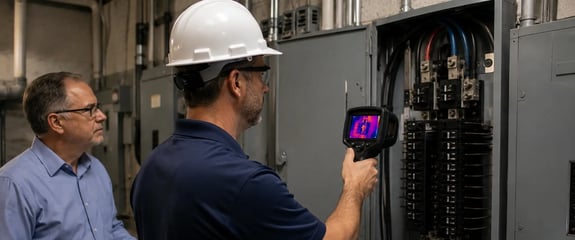
Broward County electrical safety inspections evaluate whether a qualifying building’s electrical systems show unsafe conditions, deterioration, or deficiencies that could affect safe operation. Engineers typically review service equipment, panels, disconnects, grounding, common-area systems, electrical rooms, visible wiring, and signs of overheating, corrosion, water intrusion, or aging.
Key Takeaways:
- Electrical safety is only one part of Broward County’s broader Building Safety Inspection Program.
- Local municipalities, not Broward County directly, handle notices, report review, and compliance timelines.
- Coastal exposure, humidity, storms, and moisture intrusion can make older Broward buildings more vulnerable to hidden electrical issues.
- Infrared thermography may be useful when visual inspection alone cannot fully evaluate suspected overheating or equipment concerns.
- Planning before notices arrive can make it easier to coordinate access, engineers, reports, and overlapping structural inspection needs.
Broward County’s Building Safety Inspection Program (BSIP) also requires qualifying buildings to undergo electrical safety inspections. For many condominium associations and commercial property owners in cities like Fort Lauderdale, Hollywood, Deerfield Beach, Pompano Beach and Plantation, the electrical side of the process is often the least familiar.
So why are electrical safety evaluations such an important part of Broward County’s program, and what exactly are electrical engineers looking for during these inspections?
What are Broward electrical safety inspections designed to identify?
The purpose of Broward County’s electrical safety inspections is not to force older buildings to comply with every requirement of the latest National Electrical Code (NEC).
Although electrical safety inspections in Florida do follow the NEC as adopted through the Florida Building Code, Broward County electrical safety inspections are very hands-on evaluations, focusing on identifying unsafe conditions, visible deterioration, and electrical deficiencies that could affect safe operation over time.
What does the electrical inspection typically include?
In practical terms, the electrical inspection typically includes evaluation of:
- electrical service equipment,
- panels and disconnects,
- grounding and bonding systems,
- common-area electrical systems,
- electrical room conditions,
- visible wiring conditions, and
- signs of overheating, corrosion, water intrusion, or deterioration.
Depending on the building, engineers may also evaluate rooftop equipment areas, parking garage electrical infrastructure, meter rooms, emergency systems, and other components exposed to South Florida’s harsh coastal environment.
Who is qualified to perform the inspection?
Under BORA Policy #05-05, the electrical inspection must be performed by a Florida-licensed Professional Engineer with at least five years’ experience in electrical system design, inspection, or evaluation. The engineer must document the inspection findings using Broward County’s official Electrical Safety Inspection forms.
Important: Local municipalities enforce Broward County’s Building Safety Inspection Program (BSIP)
Although Broward County’s Building Safety Inspection Program (BSIP) is based on countywide requirements established by the Broward County Board of Rules and Appeals (BORA), the local municipality where a building is located handles enforcement. That means cities like Fort Lauderdale, Hollywood, Pompano Beach, and Deerfield Beach are responsible for:
- ending inspection notices,
- reviewing submitted reports, and
- overseeing compliance timelines for buildings within their jurisdiction.
Inspection notices 2026
Municipalities are expected to begin sending 2026 inspection notices between June and August 2026. Inspection reports must be submitted directly to the city’s Building Department or Building Official, not to Broward County.
What are the electrical issues most commonly seen in Broward buildings?
In Broward County’s coastal environment, electrical systems age differently than they do in many other parts of the country.
Corrosion in hidden areas
Our engineers regularly encounter corrosion inside electrical equipment that is not visible from the outside. Buildings near the water in Fort Lauderdale, Hollywood, Hallandale Beach, and Pompano Beach are especially vulnerable after decades of salt-air exposure, humidity, storms, and moisture intrusion.
A panel may be functional during daily operation while being significantly deteriorated internally. Grounding connections may be compromised. Breakers may show signs of overheating. Disconnects sometimes contain corrosion severe enough to affect safe operation.
Years of piecemeal modifications
In older buildings, we also frequently see years of incremental modifications layered on top of one another: tenant buildouts, undocumented repairs, abandoned wiring, overloaded panels, or equipment replacements that no longer match the building’s original electrical demands.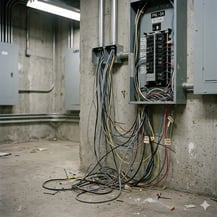
That does not necessarily mean a building is unsafe, but it does mean the systems need a closer evaluation.
Read our article that walks you through the site with a Florida building recertification engineer and learn what passes, what fails, and why, for real-world examples from our building safety inspections.
Why does infrared thermography matter in South Florida buildings?
Thermal imaging, or Infrared thermography, has become an important tool during electrical evaluations, especially in older Broward County buildings where deterioration is not always visible during a standard visual inspection.
It allows engineers to identify abnormal heat patterns inside energized electrical equipment without dismantling or damaging the system. Elevated temperatures can indicate loose connections, overloaded circuits, deteriorating breakers, unbalanced loads, failing components, or other developing issues that may not be obvious during normal operation.
In practical terms, engineers commonly use thermal imaging when evaluating:
- electrical panels,
- switchgear,
- disconnects,
- breakers,
- transformers,
- meter rooms, and
- other energized electrical equipment.
A non-invasive way to identify hidden electrical problems
In South Florida’s climate, infrared thermography is especially valuable. Heat, humidity, salt exposure, and moisture intrusion accelerate deterioration in ways that are not always visible from the exterior of the equipment. Infrared thermography helps engineers identify hidden conditions early while the equipment is still operational. (Read more about the power of infrared thermography.)
When infrared thermography becomes part of the electrical safety inspection
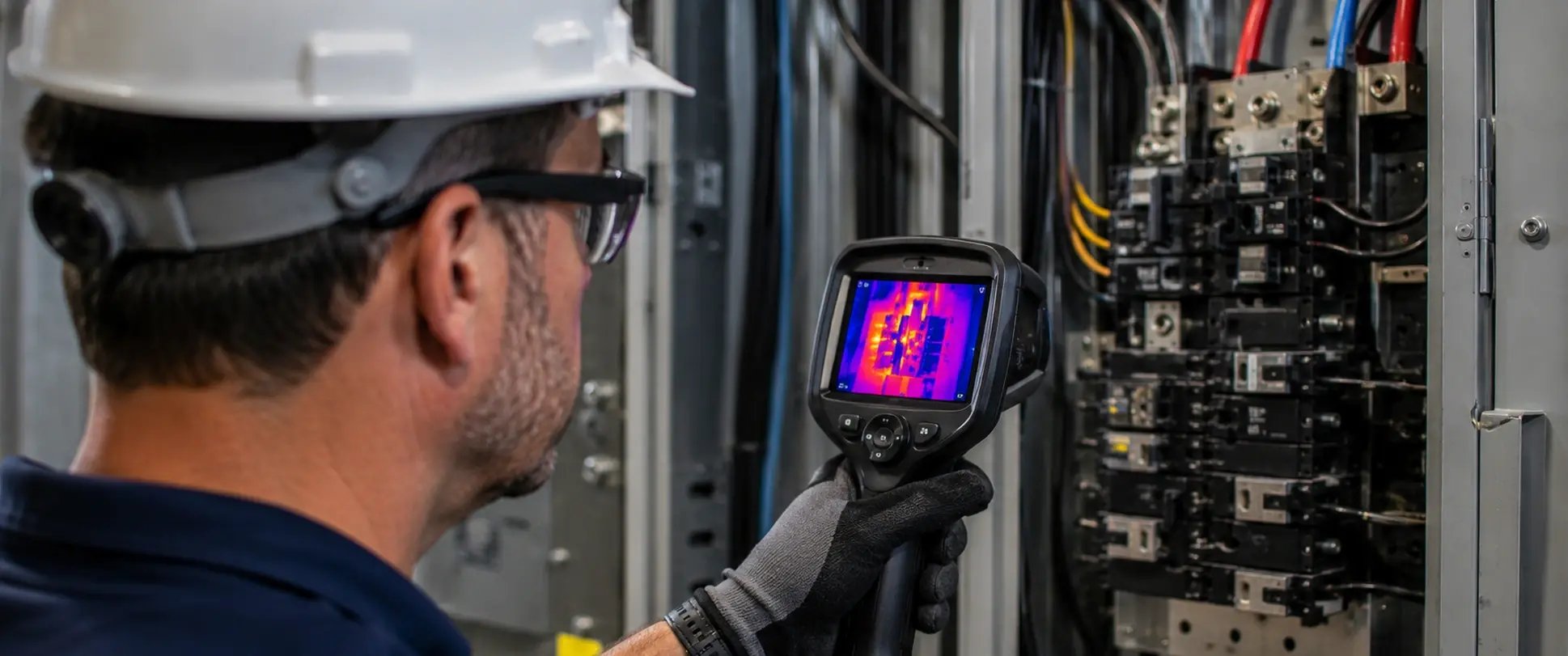
Broward County does not explicitly require thermal imaging as part of every Phase 1 electrical inspection. However, when conditions warrant further evaluation, engineers may incorporate thermal imaging into the inspection process and document relevant findings within their reporting.
In practice, that flexibility can be extremely important. During site visits, engineers sometimes encounter conditions that raise concerns about overheating, moisture intrusion, deteriorated connections, or equipment performance that cannot be fully evaluated through visual inspection alone. In some South Florida municipalities, BSIP reviewers may also request thermal imaging if they believe additional evaluation is necessary before accepting the report.
When an electrical engineer is already qualified to perform infrared thermography, those evaluations can often be completed immediately as part of the inspection process instead of requiring additional site visits, outside consultants, scheduling delays, or supplemental reporting later.
At Building Mavens, their team includes Certified Level II Thermographer Nicholas Strachan, who has extensive experience evaluating South Florida buildings exposed to Broward County’s unique coastal conditions. That local experience matters because buildings in Fort Lauderdale, Deerfield Beach, and other coastal Broward cities age very differently than buildings in drier inland environments.
Did you know?
Before the 2024 BSIP updates, Broward’s program was more commonly associated with 40-year recertification inspections. Under the updated Building Safety Inspection Program, qualifying buildings are now subject to inspection beginning at 25 years of age, with recurring inspections every 10 years.
Why Should Broward Associations Start Planning Electrical and Structural Inspections Early?
Many associations and building owners wait until the official notice arrives before beginning conversations with engineers. This can create unnecessary pressure.
Once municipalities across Broward County begin issuing notices, demand for inspections and scheduling increases quickly. Buildings in Fort Lauderdale, Hollywood, Pompano Beach, and other Broward cities are often moving through the process at the same time.
The inspection process also requires preparation and coordination that boards sometimes underestimate. Associations may need to coordinate access to electrical rooms, rooftops, garages, common areas, maintenance records, and equipment that cannot be evaluated during a quick walkthrough.
Buildings that begin planning earlier generally have more flexibility and fewer scheduling challenges once deadlines begin approaching.
Coordinating structural and electrical inspections together
Broward County’s Building Safety Inspection Program includes both structural safety inspections and electrical safety inspections.
Those evaluations frequently have a lot of logistical overlap. Site access, documentation, scheduling, reporting timelines, and repair coordination often involve both disciplines simultaneously.
That is one reason many associations and commercial property owners prefer working with an engineering team that can handle both sides of the inspection process together.
At Building Mavens, their structural and electrical engineers work collaboratively throughout the building safety inspection process, allowing their clients to streamline scheduling, reduce duplicate site visits, simplify communication, and coordinate overlapping field work more efficiently.
Because their team is based locally in South Florida and is familiar with Broward County municipalities and inspection workflows, they can help clients navigate the process with fewer delays, less administrative complexity, and better coordination between disciplines.
For many associations and property owners, that coordination saves significant time and helps reduce the stress that often comes with preparing for Broward County’s building safety inspection requirements.
Learn More About Building Inspection Topics
Campbell Property Management regularly hosts educational webinars related to building inspections, structural and electrical safety, maintenance planning, engineering issues, and other topics that affect Florida condominium and HOA communities. Visit CampbellEvents.org for upcoming educational opportunities and events.
Scott Harvey-Lewis is the visionary President and owner of Building Mavens, a preeminent Milestone Inspections and Engineering Consulting Firm based in the heart of Palm Beach Gardens, Florida. As a licensed professional engineer with over a decade of experience and nearly two decades of dedicated engineering expertise, he is exceptionally qualified in delivering a comprehensive suite of services in structural engineering, including design, construction, administration, and forensic analysis, catering to clients and projects across the public and private sectors.