Hurricane Planning for Property Managers Webinar
For Florida community associations, hurricane planning for property managers is an essential responsibility for maintaining the safety and value of the property. To provide community leaders with actionable insights, we recently hosted an educational CEU course featuring roofing industry expert Jordan Litt from Best Roofing, who shared his expertise on proactive risk mitigation, pre-storm inspections, and effective post-storm response strategies. This informational webinar highlighted the critical importance of maintaining a secure building envelope and establishing strong vendor relationships before the peak of the season.
Disclaimer: This video is for educational purposes only. You will not receive credits for watching the recording. Credits were issued only to those that attended the course.
If you enjoyed this video, check out our YouTube channel and subscribe to view all of our educational videos relating to community association management in Florida.
Key Takeaways
-
Proactive Audits: Comprehensive roof inspections should be conducted well before hurricane season begins to identify and repair minor vulnerabilities that could lead to major failures during high-wind events.
-
Building Envelope Security: Protecting the entire structure, including windows and doors, is vital to prevent positive pressure from compromising the roof deck from the underside.
-
Vendor Relationships: Establishing an existing relationship with a trusted contractor is critical, as many top-tier firms prioritize existing clients and may not take on new projects immediately following a storm.
-
Documentation is Key: Time-stamped photo reports from pre-storm and post-storm inspections provide essential evidence for insurance claims and help demonstrate a board's commitment to property maintenance.
What are the Primary Components of Hurricane Risk Mitigation?
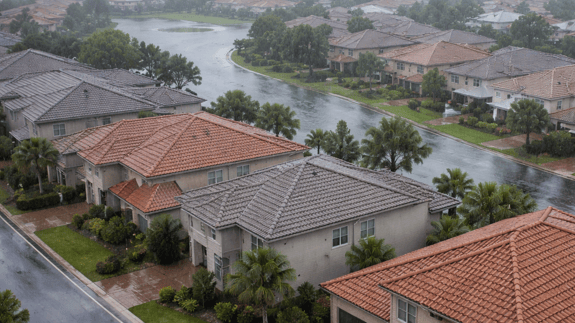
Effective hurricane risk mitigation begins with a thorough understanding of your property's structural health. In Florida, the roof is often the first line of defense against extreme weather, making it a vital concern for any HOA management team. Whether your community features low-slope flat roofs or steep-sloped pitched systems like tile, shingle, or metal, each material reacts differently to high-wind events and requires specific maintenance protocols to remain secure.
Beyond the roof itself, securing the entire building envelope is a key focus for hurricane damage prevention. If windows or doors fail during a storm, the resulting internal pressure can push upward against the roof deck, leading to structural failure even if the roofing material remains intact. Proactive South Florida property management involves ensuring that all exterior components are inspected and reinforced to withstand the unique pressures of a tropical cyclone.
"Shelter is a basic necessity, and the roof over your head is the key component to making sure you are in a safe, dry structure. Understanding how to secure and maintain that roof is vital based on the specific system you have on your property." - Jordan Litt, Best Roofing
Implementing a Hurricane Season HOA Checklist
Pre-Storm Inspections and Maintenance
A robust hurricane season HOA checklist should always prioritize a comprehensive roof audit. These inspections go beyond simple visual checks, utilizing a grading system to assess the remaining useful life of the roof and identifying "emergency repairs" that must be addressed immediately. Clearing drains and scuppers is another essential task, as standing water can add immense weight to a roof and increase the risk of leaks or collapse during heavy rainfall.
For condominium management teams, these pre-storm efforts are about more than just physical repairs; they are about creating a "paper trail" of diligence. Having a dated, time-stamped photo report of the property's condition before a storm hits is invaluable when dealing with insurance adjusters. This level of hurricane preparedness demonstrates that the board has met its fiduciary duty to protect the association's assets.
Post-Storm Response and Recovery
Once the storm has passed, the post-storm response for property managers shifts to rapid assessment and stabilization. The first priority is to conduct a post-storm inspection to identify any new damage and perform emergency "dry-in" repairs to prevent further moisture intrusion. This is where having a pre-existing relationship with a contractor becomes a significant advantage, as they can mobilize quickly to service their established clients.
It is also important to understand the difference between a manufacturer's warranty and an insurance policy. Most roofing warranties include "Act of God" clauses that may invalidate coverage following a direct hit from a named storm. Property managers must work closely with their insurance providers to understand exactly what is covered, such as wind-driven rain versus structural damage, to ensure the association is fully protected during the recovery process.
Frequently Asked Questions
What is the difference between a roof warranty and insurance coverage?
A roof warranty typically covers workmanship and material defects but often excludes damage from "Acts of God" like hurricanes. Insurance policies are designed to cover storm-related damage, but the specific coverage for wind-driven rain versus structural failure can vary significantly between policies.
Why are pre-storm roof audits so important for HOAs?
Pre-storm audits identify minor vulnerabilities that can be repaired cheaply before they lead to major failures. They also provide essential "before" documentation that proves the property was well-maintained, which is critical for a successful insurance claim after a storm.
Visit our blog for more educational content, webinars, and resources to help your association stay informed on the latest community management topics.
Ashley Dietz is the VP of Marketing at Campbell Property Management and has led the company’s educational and marketing initiatives since 2013. A Florida Atlantic University graduate with a bachelor’s degree in communications, Ashley specializes in community association education, digital outreach, and industry engagement for Florida HOAs and condominiums.