Florida Condo Capital Improvements Webinar
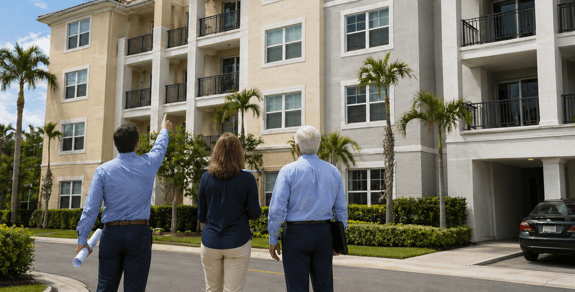
Planning Florida condo capital improvements has become one of the most consequential responsibilities a board can take on, because a single project done poorly can cost a community a million dollars more than once. We recently hosted a CEU course featuring industry professional Tara Lyn Stone of Stone Building Solutions, who walked licensed community association managers through the process of getting these projects right the first time.
This important webinar examined the full lifecycle of a capital improvement project, from reserve and emergency planning through design, procurement, contracts, construction monitoring, and closeout. Attendees learned how insurance, lending, and Florida law now shape every major decision an aging community makes.
Disclaimer: This video is for educational purposes only. You will not receive credits for watching the recording. Credits were issued only to those that attended the course.
If you enjoyed this video, check out our YouTube channel and subscribe to view all of our educational videos relating to community association management in Florida.
Key Takeaways
-
Spend Once, Not Twice: The core lesson is learning to spend a project budget a single time, since deferred maintenance routinely costs roughly thirty times more than the preventative work that would have avoided it.
-
The Bank Is the New Gatekeeper: Updated Fannie Mae and Freddie Mac reviews mean underfunded reserves can block unit buyers from conventional loans, shrinking the buyer pool and lowering property values.
-
A Roof Is Never Simple: Even a straightforward reroof hides defects like improper flashing, trapped debris, and overdriven nails that stay invisible until leaks and voided warranties surface years later.
-
Never Walk the Road Alone: Whether it is an engineer or an owner's representative, professional oversight through all project stages is what separates a protected board from a costly lawsuit.
Why Are Capital Improvements Riskier Than Ever?
Condominium living in Florida is now shaped by three powerful forces working together: insurance, banking, and politics. After the Surfside collapse, state law strengthened milestone inspections, recertification, and reserve funding requirements, and insurers began folding all of that new data into how they decide whether to cover a building and whether to pay a claim. For boards managing condominium communities, these pressures have turned routine capital improvement projects for HOAs and condos into decisions with far higher stakes than in years past.
Insurance, Banking, and Politics
These three pillars now guide nearly every financial choice a community makes. Insurance has shifted from a simple recertification checkpoint at forty years to an ongoing risk analysis built on the data the state requires associations to collect. Politics drives what must be gathered, and banking increasingly decides what that data means for a building’s future.
The Lending Rules That Affect Unit Values
A change in the banking industry now reaches every condominium in the country, regardless of height or age. For the roughly half of Florida condos underwritten to Fannie Mae and Freddie Mac standards, a review that was once partial is now full, and associations that fund reserves only at a bare minimum or baseline level may leave unit buyers unable to secure a conventional loan. When half the buyer pool disappears, values fall, and boards that skip capital improvement projects or underfund reserves become the reason a sale collapses.
“The bank isn’t your lender. It is now the gatekeeper for the value of your associations.” - Tara Lyn Stone, Stone Building Solutions
The Real Cost of Waiting
Delay rarely feels like a decision, but it is one of the most expensive choices a board can make. Waiting for one more proposal or slow-walking a project to avoid writing a check turns manageable work into deferred maintenance, which almost always costs many times more than the preventative alternative.
A Tale of Two Boards
One community with a capable, battle-tested board won an eleven million-dollar insurance settlement, then put a large deposit on a window contractor it had not fully vetted. After trying to cancel, the board spent years in litigation over the deposit alone and ended up spending nearly a million dollars with nothing to show for it. A second community took the opposite path, caught up on its projects, planned the next five years, and saw unit values rise while the reserves generated meaningful interest income.
False Savings and Deferred Maintenance
The pattern behind most failures is the same: each shortcut feels like saving money in the moment. Choosing the cheapest contractor, skipping an engineer, or reducing the scope to lower a bid all create hidden costs that surface later. Sound community association capital planning treats these projects as predictable investments rather than emergencies, which is where real savings come from.
Why a Simple Roof Is Never Simple
A roof looks like the easiest project a board will ever approve, which is exactly why it causes so much trouble. From the ground a finished roof can look perfect while failing at nearly every connection point underneath, and once shingles go down, the most serious defects are covered up completely.
Defects Hidden Beneath the Shingles
Real communities have discovered leaking on roofs only two years old, traced back to indoor sealant used outdoors, cracked parapet walls, rotten decking sealed under new shingles, debris trapped in valleys, and nails driven too hard through the shingle itself. Improper flashing is one of the most common problems, often bid as work to be done only "as needed" because doing it correctly means cutting back stucco and installing it properly.
Warranties That Do Not Cover What You Think
Manufacturer warranties carry exclusions that few boards ever read. One major shingle maker specifically excludes flashing from its warranty while a competitor includes it, and a missed ventilation calculation was enough to void a manufacturer warranty entirely and send a contractor into a multimillion dollar lawsuit. These are the kinds of details a volunteer board cannot reasonably be expected to catch, which is why roofing and other condo capital improvements call for professional eyes.
“A roof can look perfect from the ground and fail at every point underneath.” - Tara Lyn Stone, Stone Building Solutions
Engineer or Owner’s Representative?
Two kinds of professionals can stand beside a board, and understanding the difference helps communities decide what they need. An engineer ensures technical compliance with specifications and codes, while an owner’s representative acts as an advocate for the board, managing cost, schedule, communication, and the contractor relationship.
Two Roles, One Goal
Large high-rise condominium communities often hire both an engineer and an owner’s representative as a matter of routine, while a smaller garden-style community may struggle to afford even one. The right partner can sometimes fill both roles, giving a board technical rigor and practical advocacy without doubling the cost.
Reading the Data Through Every Lens
Interpreting engineering data from a single perspective is not enough. The same report needs to be read the way a bank would read it when a buyer seeks a loan, the way an insurer would read it at renewal or during a claim, and the way Florida Statutes 718 and 720 frame the board’s fiscal duties. Looking through all of these lenses at once is what turns raw data into a sound decision.
The Stages of a Capital Improvement Project
Every project moves through a predictable lifecycle, and skipping any stage tends to cost far more than doing it properly. Understanding each step gives a board a roadmap for protecting both its budget and its building.
Reserve and Emergency Planning
The first stage aligns the reserve study with a realistic project timeline and an insurance and storm contingency plan. Comparing straight-line and pooled approaches to capital improvement funding for a condo association helps a board know when work is due and whether the money will be there. Storm planning matters just as much, since one community used its insurance funds for flood recovery after a thousand-year flood and had to rebuild its plan from there, a reminder that federal flood coverage is designed to prevent bankruptcy rather than make a community whole.
Design, Specifications, and Engineering
The second stage is about writing exactly what will be bid so every contractor is pricing the identical scope. Without detailed specifications, the lowest number simply reflects the smallest amount of work, not the best value.
“The bid without an investigation is a guess with a signature line.” - Tara Lyn Stone, Stone Building Solutions
Procurement and Contractor Vetting
The third stage puts the scope out through a sealed bid process and vets every contractor before a number is even considered. Checking license, insurance, financial standing, litigation history, and references prevents disasters like the "handyman" who was not a licensed contractor and left an association with more than a dozen buildings opened without permits.
Contracts and Financial Controls
The fourth stage builds financial protection into the agreement itself, keeping deposits minimal and tying payments to completed milestones rather than to how many buildings a contractor has opened. Structuring contract terms around the staging of the work keeps a board from getting in over its head, though the contract should still pass through the association’s attorney before signing.
Construction Monitoring
The fifth stage puts independent eyes on the work through quality inspections, payment application review, change order discipline, and schedule accountability. When a project falls behind, monitoring means catching it early with a recovery plan rather than learning about the delay months later.
Closeout and Documentation
The final stage assembles the punch list and warranties into properly registered, retrievable records, then updates the reserve study so it stays current for lenders. A clean closeout report becomes an asset a community can show to an insurer at renewal, to a prospective buyer, or to a bank, strengthening its position against newer construction down the street.
Turning Capital Projects Into Lasting Value
The difference between a community that thrives and one that struggles rarely comes down to luck or even to the size of its budget. It comes down to whether a board treats each project as a disciplined, well-documented process supported by the right professionals, or as a series of isolated emergencies handled alone. When capital improvements are planned around accurate reserves, clear specifications, careful oversight, and thorough records, they stop being a source of risk and become a steady investment in the building’s safety, its financial health, and the long-term value every owner is counting on.
Frequently Asked Questions
Does funding reserves to the highest recommended amount mean we can no longer use a baseline budget?
Funding only at a baseline or bare minimum level can leave unit buyers unable to get a conventional loan under the new full review. Boards should weigh that lending impact rather than defaulting to the lowest allowable contribution.
Are performance bonds necessary for condo capital improvement projects?
On smaller projects, generally those under a million dollars, bonds are often impractical and expensive. Scheduling payments as work is completed, and holding funds until the job is finished, reduces risk more efficiently.
Can we rely on city inspectors to catch construction problems?
No. Plenty of Florida construction defect litigation involves projects that were permitted and passed inspection, so a certificate of occupancy is no guarantee of quality. Independent oversight from an engineer or owner's representative looks far more closely than a code inspection does.
Explore Florida Association News (FAN) for the latest legal developments, helpful resources, and practical guidance for community associations.
Ashley Dietz is the VP of Marketing at Campbell Property Management and has led the company’s educational and marketing initiatives since 2013. A Florida Atlantic University graduate with a bachelor’s degree in communications, Ashley specializes in community association education, digital outreach, and industry engagement for Florida HOAs and condominiums.